BluBlush City JournalKampala, Uganda

The Kampala Chronicle

History · Culture · People · Places

A city remembered. A city unfolding.

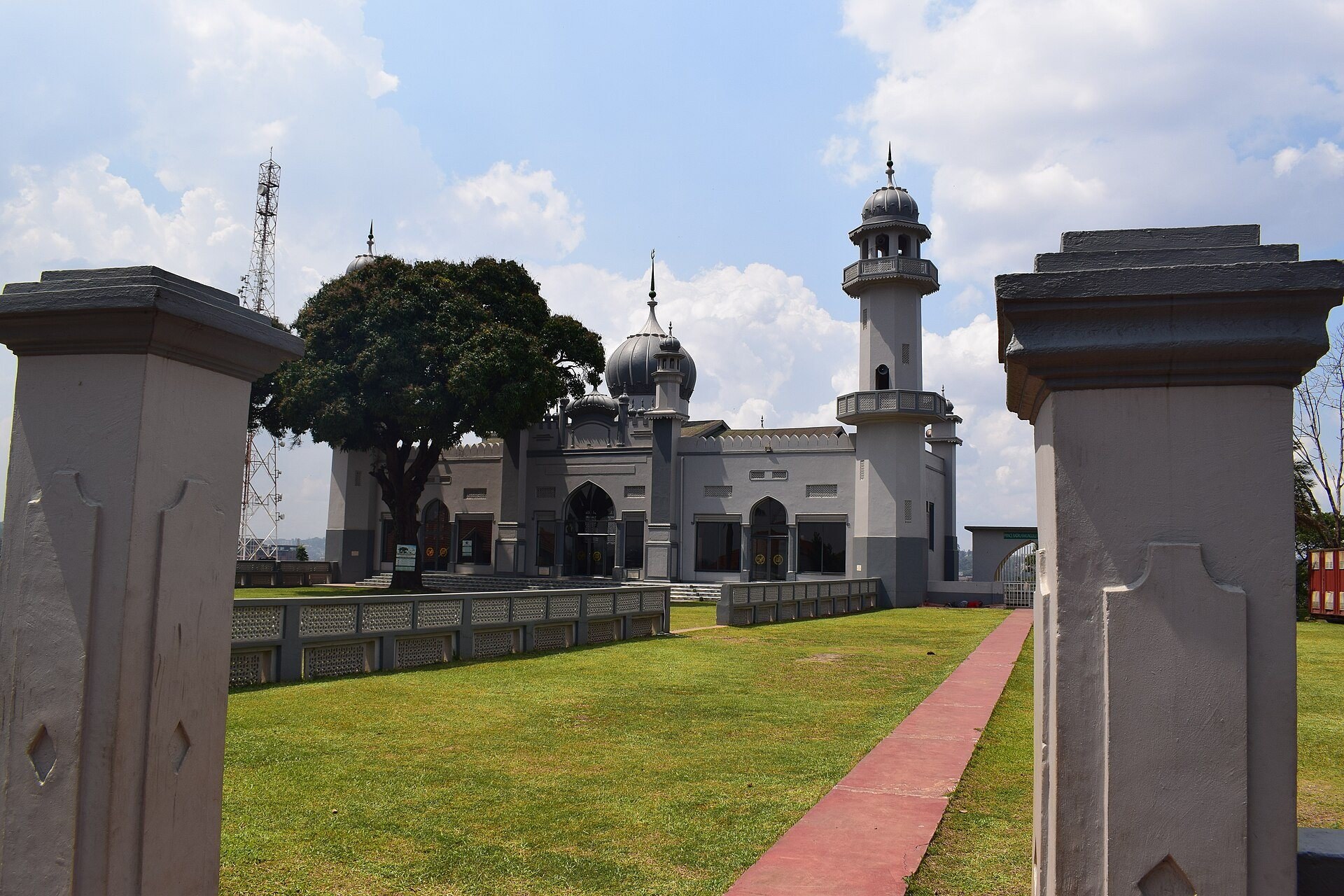
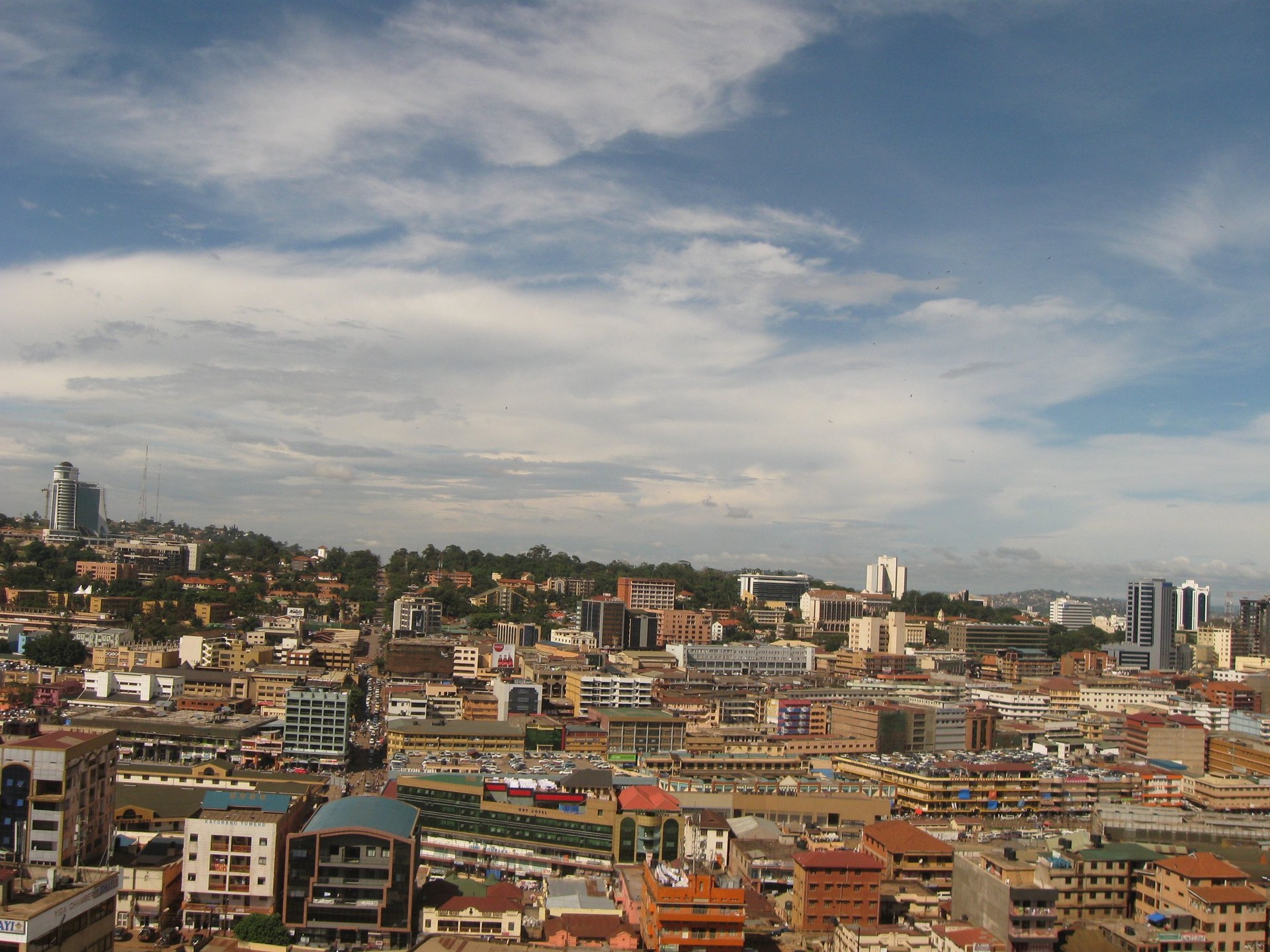
Central Kampala's towers and rooftops, with green hills beyond, seen from a minaret on Old Kampala hill
The city centre from the minaret of the Uganda National Mosque on Old Kampala hill, 2015.Ruslik0, CC BY-SA 4.0

Cover story

Seven hills. A thousand stories.

Kampala grew hill by hill: a palace on Mengo, cathedrals on Namirembe and Lubaga, a mosque on Kibuli, a British fort on the hill of the impala. The city still reads best the same way, one hill at a time.

Read the story
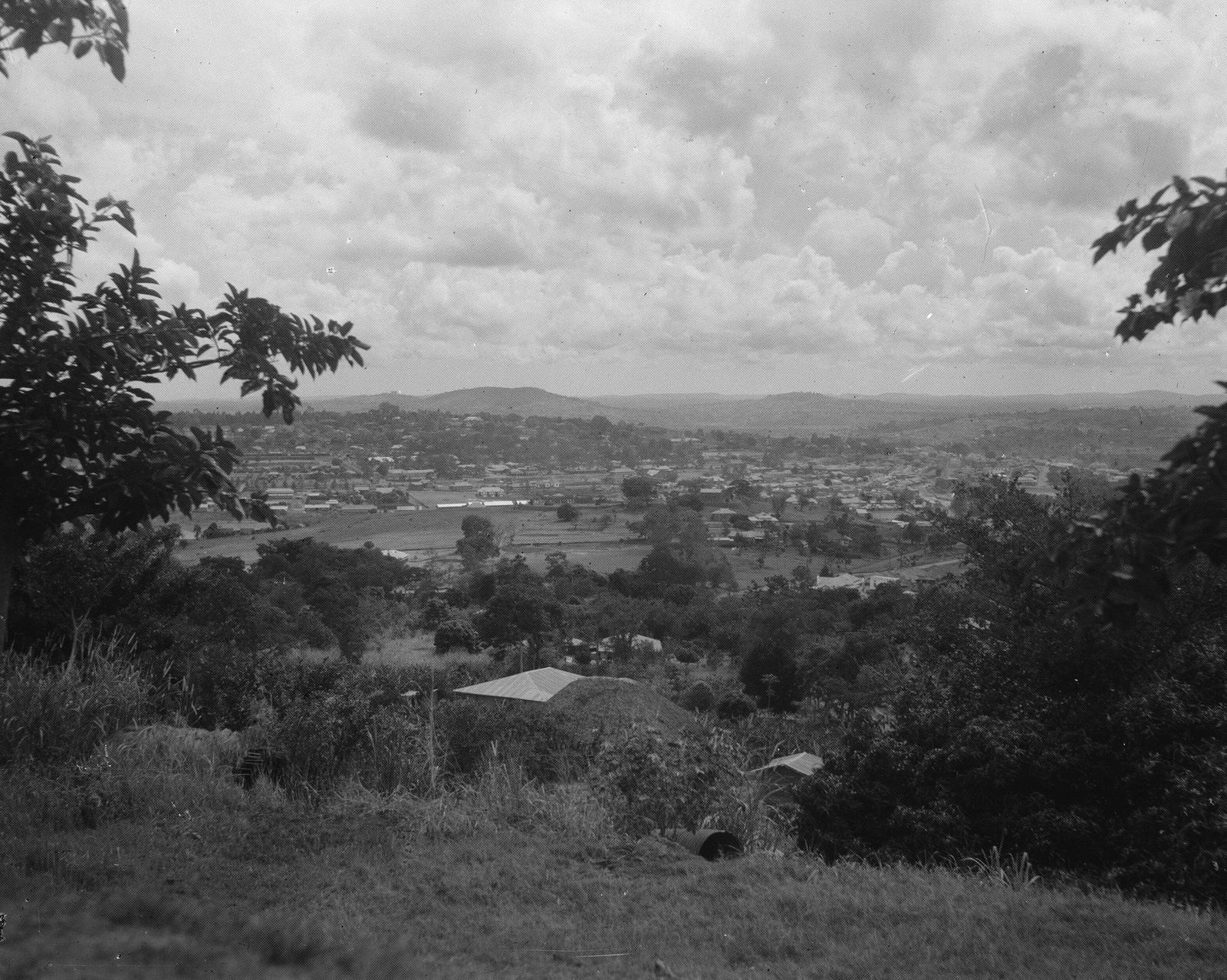
A black and white view over a low, tree filled Kampala town towards distant hills, taken from Namirembe in 1936
Kampala from Cathedral Hill, Namirembe, 1936.Matson Collection, Library of Congress, No known restrictions (public domain)

The record

Before the city had its name

For centuries the capital of Buganda, the kibuga, moved with each Kabaka to a hill of his choosing. In 1885 Kabaka Mwanga II built his palace, the Lubiri, on Mengo, and the capital stayed.

In 1890 Frederick Lugard of the Imperial British East Africa Company raised a fort on the neighbouring hill. The British called it the hill of the impala; in Luganda, akasozi k'empala. The name of one small hill became the name of the city.

SourcesHistory of KampalaLubiri

The record, in dates1882 to 2023
  1. 1882Kabaka Mutesa I builds a palace at Kasubi. After his death in 1884 it becomes the burial ground of the kings of Buganda.

    SourcesTombs of Buganda Kings at Kasubi

  2. 1885Kabaka Mwanga II settles the capital on Mengo hill.

    SourcesLubiri

  3. 1890Lugard's fort goes up on the hill now called Old Kampala.

    SourcesHistory of Kampala

  4. 1906The first township boundary is drawn, a three mile radius around the fort.

    SourcesHistory of Kampala

  5. 1919The present Namirembe Cathedral is completed, the fifth church on the hill.

    SourcesNamirembe Cathedral

  6. 1925Lubaga Cathedral, begun by the White Fathers, is consecrated.

    SourcesLubaga Cathedral

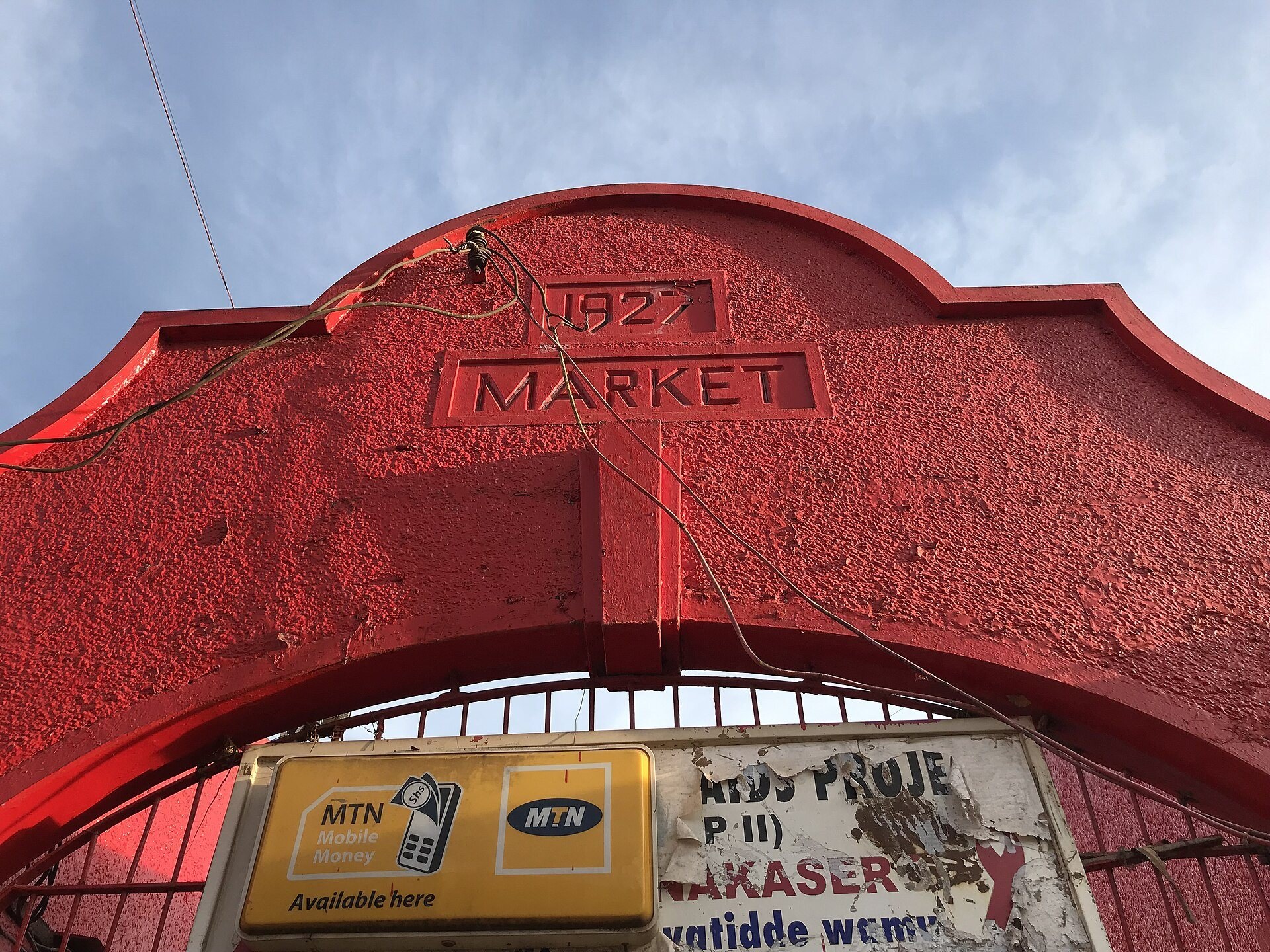
  7. 1927Nakasero Market opens on its present site in the middle of the town.

    SourcesNakasero Market

  8. 1951Kibuli Mosque opens for worship.

    SourcesKibuli Mosque

  9. 1954The Uganda Museum, founded in 1908, moves into Ernst May's building on Kitante Hill.

    SourcesUganda Museum

  10. 1958The Bulange, seat of Buganda's parliament, the Lukiiko, is completed.

    SourcesBulange

  11. 1962Independence on 9 October. The capital moves from Entebbe to Kampala.

    SourcesHistory of Kampala

  12. 1966Government troops storm the Lubiri. Kabaka Mutesa II escapes into exile.

    SourcesLubiri

  13. 1968The city widens to take in Mengo, Kawempe and Nakawa.

    SourcesHistory of Kampala

  14. 1993The kingdom's institutions are restored, and the Lubiri returns to Buganda.

    SourcesLubiri

  15. 2010On 16 March fire destroys Muzibu Azaala Mpanga, the great house of the tombs at Kasubi.

    SourcesTombs of Buganda Kings at Kasubi

  16. 2023Rebuilt by hand, Kasubi leaves UNESCO's list of sites in danger.

    SourcesKasubi removed from the List of World Heritage in Danger

Stories

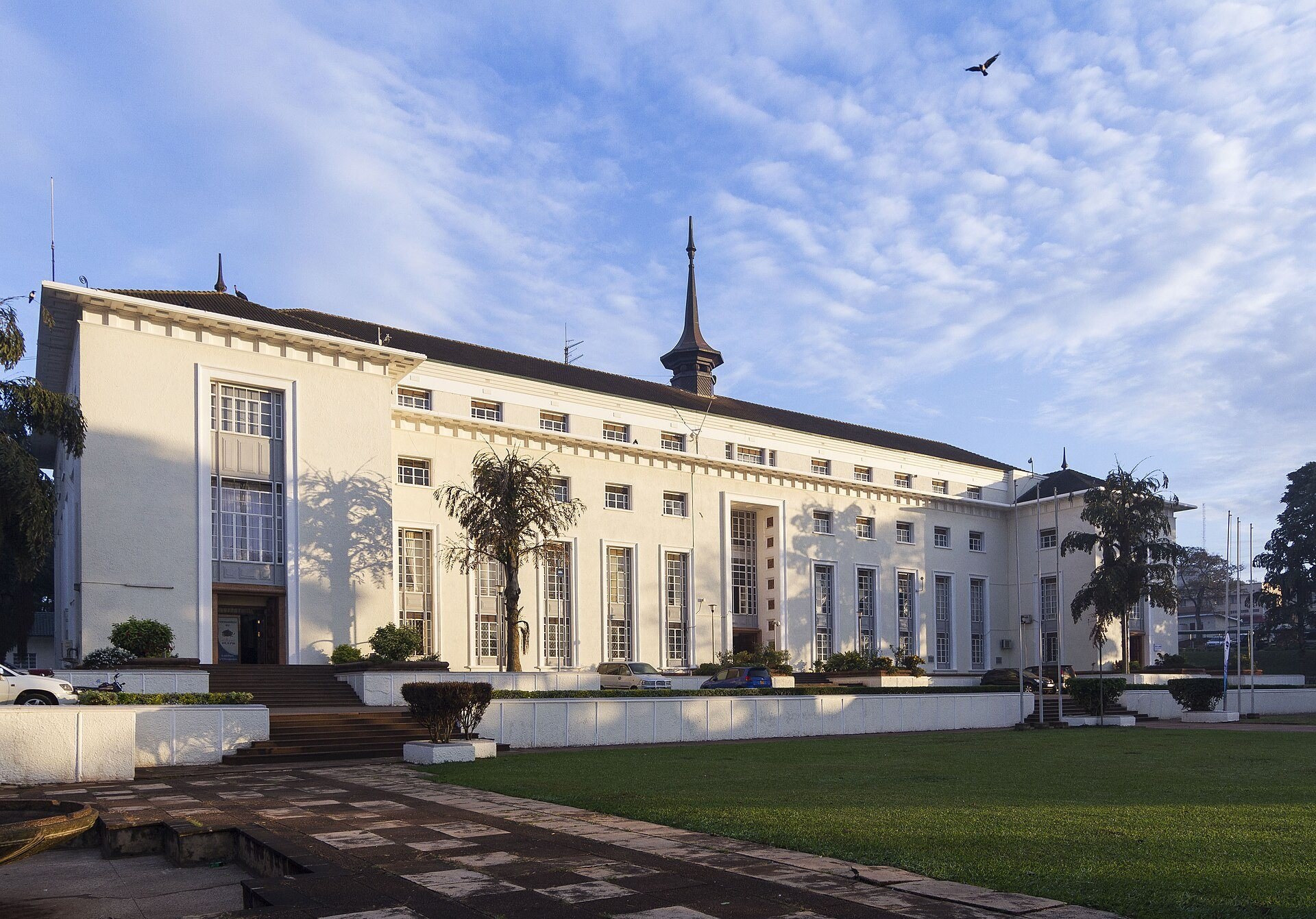
The long white facade of the Bulange with its central spire, under a blue sky
The Bulange, seat of the Lukiiko, 2018.Jim Joel, CC BY-SA 4.0

Buganda

The kingdom behind the city

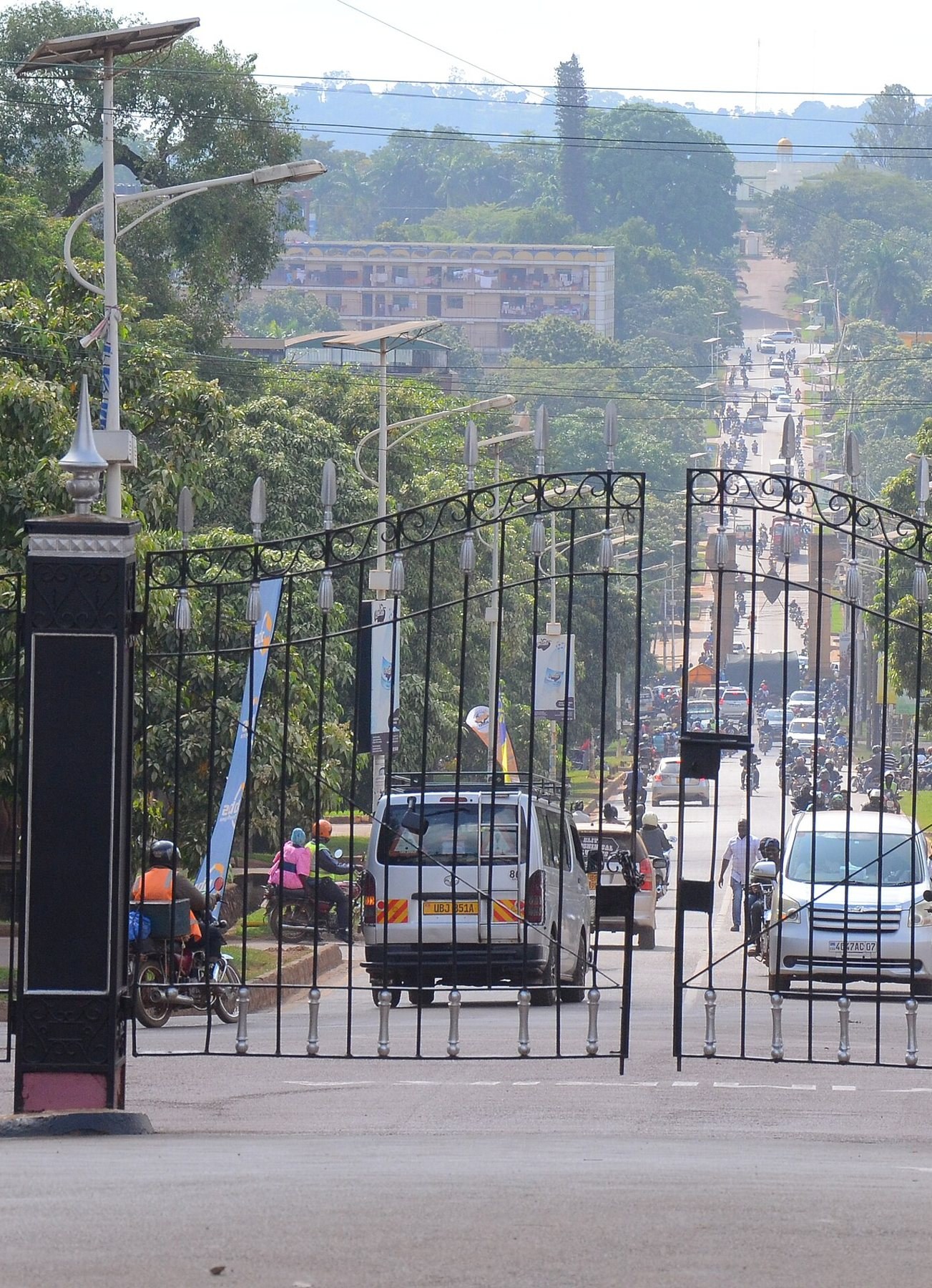
Kampala sits inside Buganda, a kingdom far older than the city. A straight road, Kabaka Anjagala, “the king loves me”, runs about a mile from the Bulange, the kingdom's parliament, to the Lubiri palace on Mengo.

Only the Kabaka drives straight across the roundabout halfway along; everyone else goes around.

SourcesWalking the Royal MileBulange

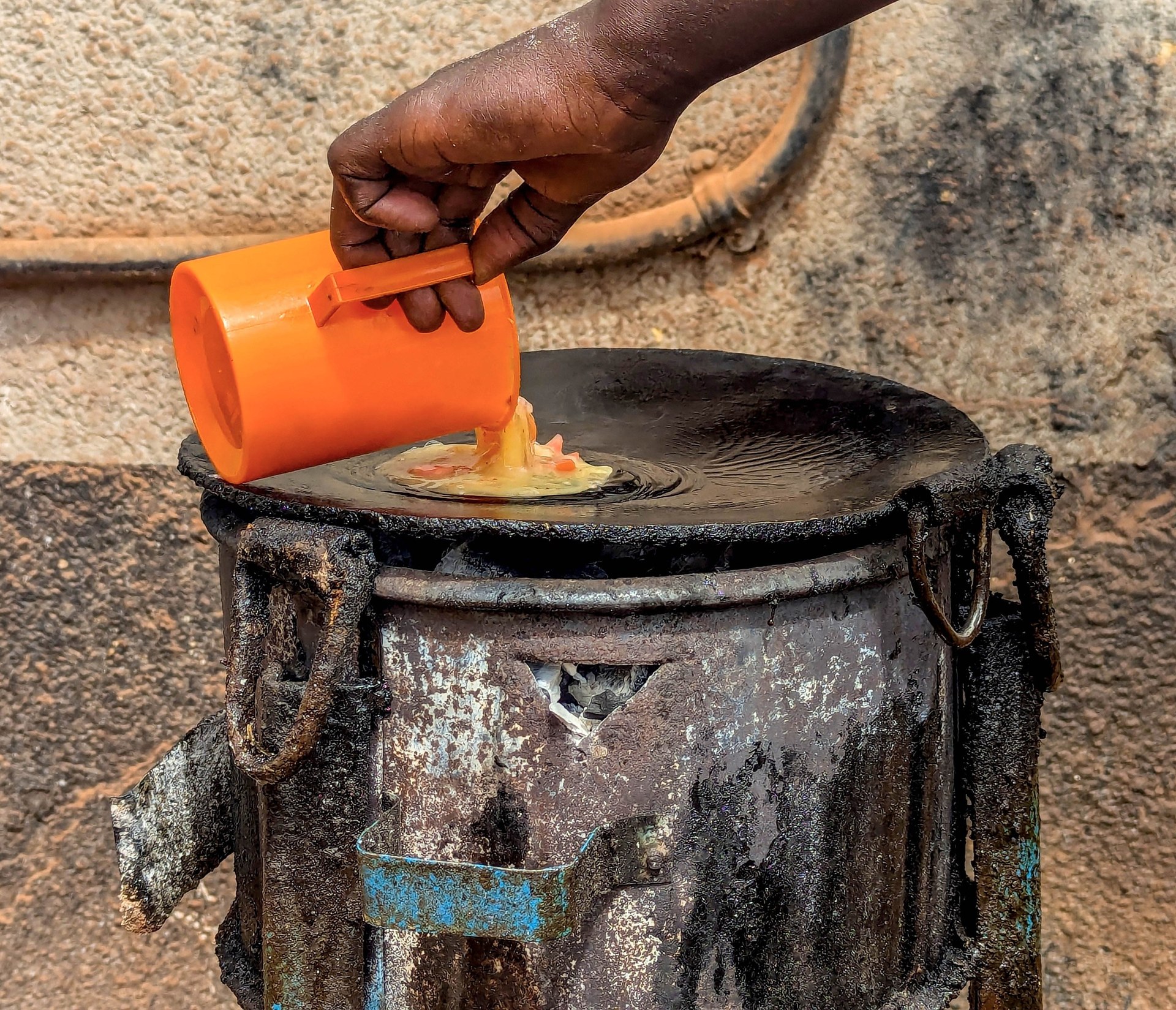
Egg poured onto a hot pan at a rolex stand
Making a rolex.Ssemmanda Will, CC BY-SA 4.0

Food

A city served on a plate

Start with a rolex: an omelette with tomato, onion and cabbage, rolled in a fresh chapati, made in front of you at roadside stands. Rolled eggs, said quickly.

Then matooke, green bananas steamed in their own leaves, and luwombo, a stew slow steamed in banana leaf, once made for the court and now for celebrations.

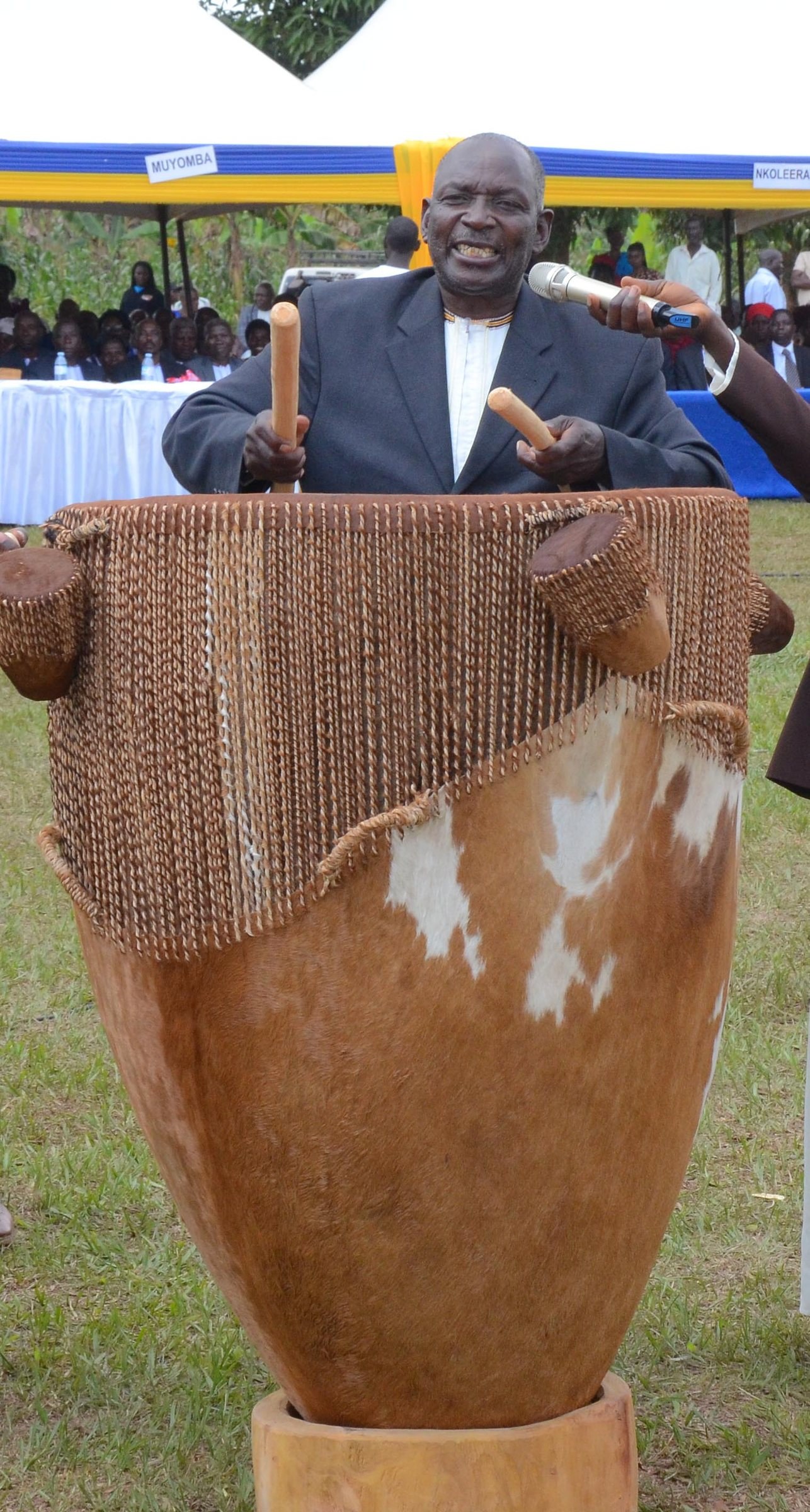
An elder playing a large cowhide drum with two sticks at an outdoor ceremony
Clan drumming at a Kiganda ceremony, Mpigi, 2025.Samson Ssemakadde, CC0

Music

What Kampala sounds like

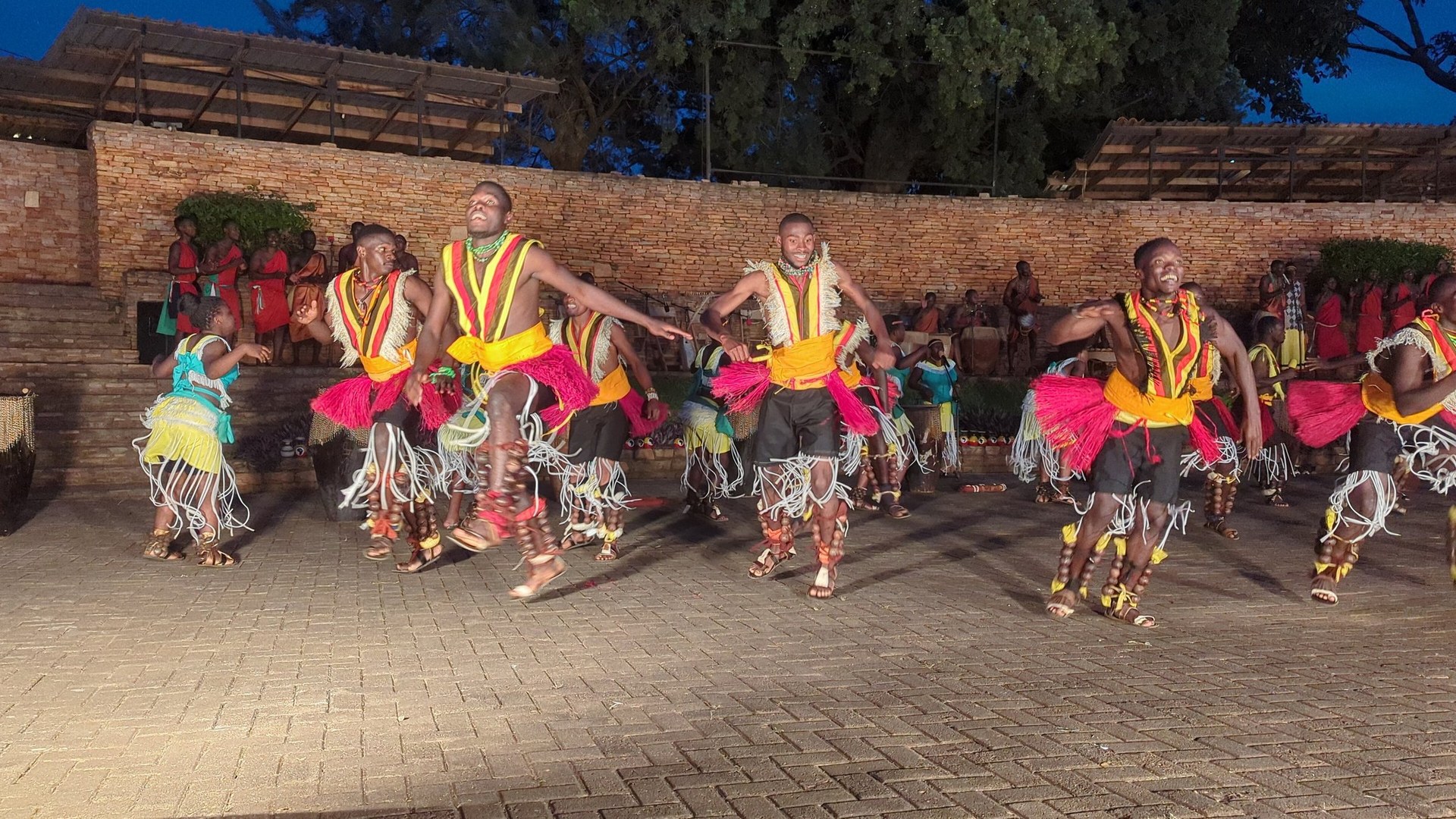
In Kiganda music the drums lead: drums of many sizes, played together for dances, ceremonies and the court. You will hear them at introductions, weddings and clan gatherings.

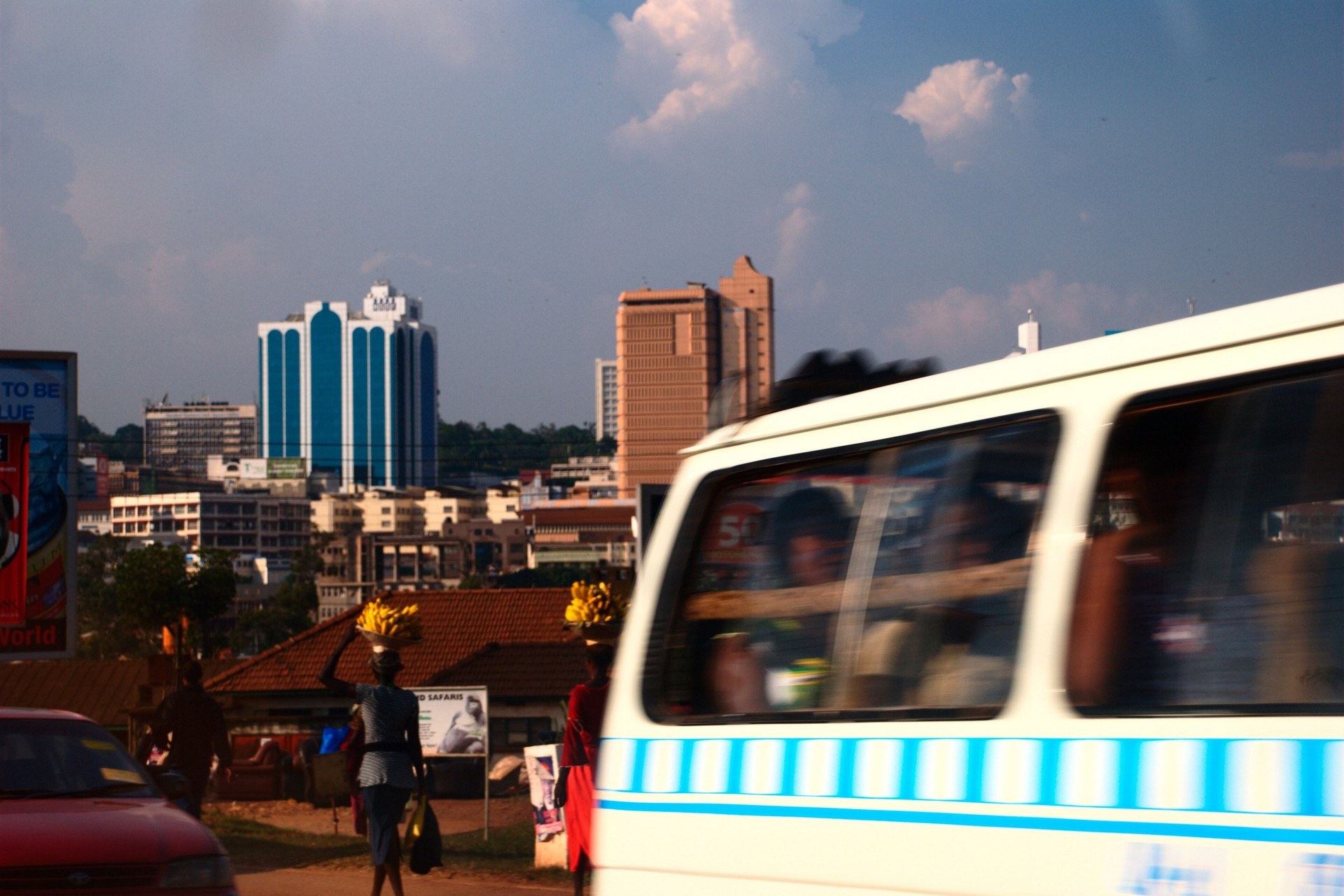
A white Kampala minibus taxi passing in front of the city skyline
A matatu below the skyline.Fläschen, CC BY-SA 3.0

Getting around

The hands that keep the city moving

Matatus, the white minibus taxis with the blue band, run on routes the conductor calls out; you pay on the way. Boda bodas, the motorbike taxis, are quickest through traffic: book on SafeBoda or Bolt, or wave one down.

On a boda, always wear the helmet and agree the price first. Say mpola, slowly, if you want it slower.

Then and now

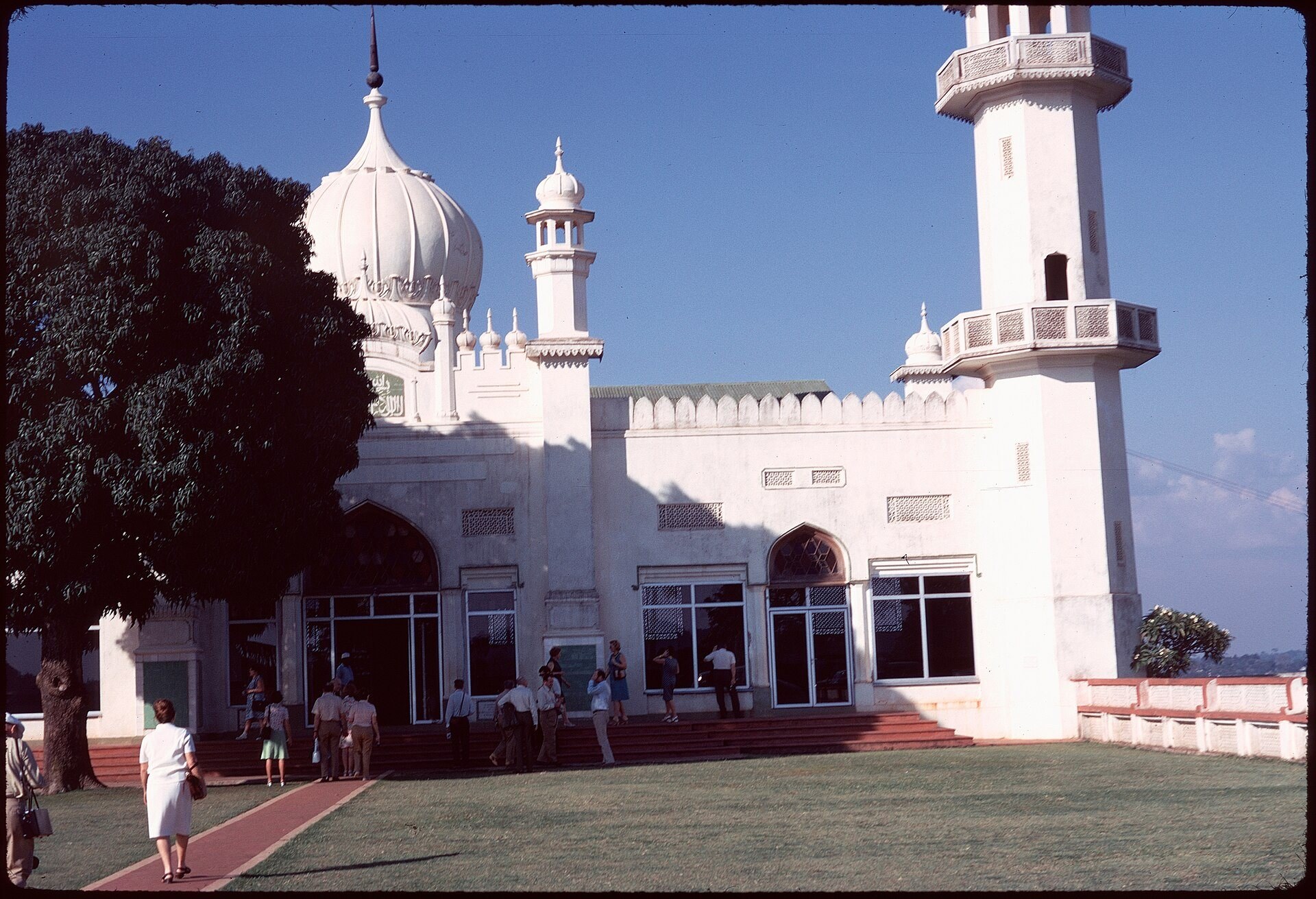
Kibuli, fifty years apart

Kibuli is one of the hills Kampala grew from. Its mosque opened for worship in 1951 and still crowns the hill.

SourcesKibuli Mosque

Living Kampala

The city, day to day

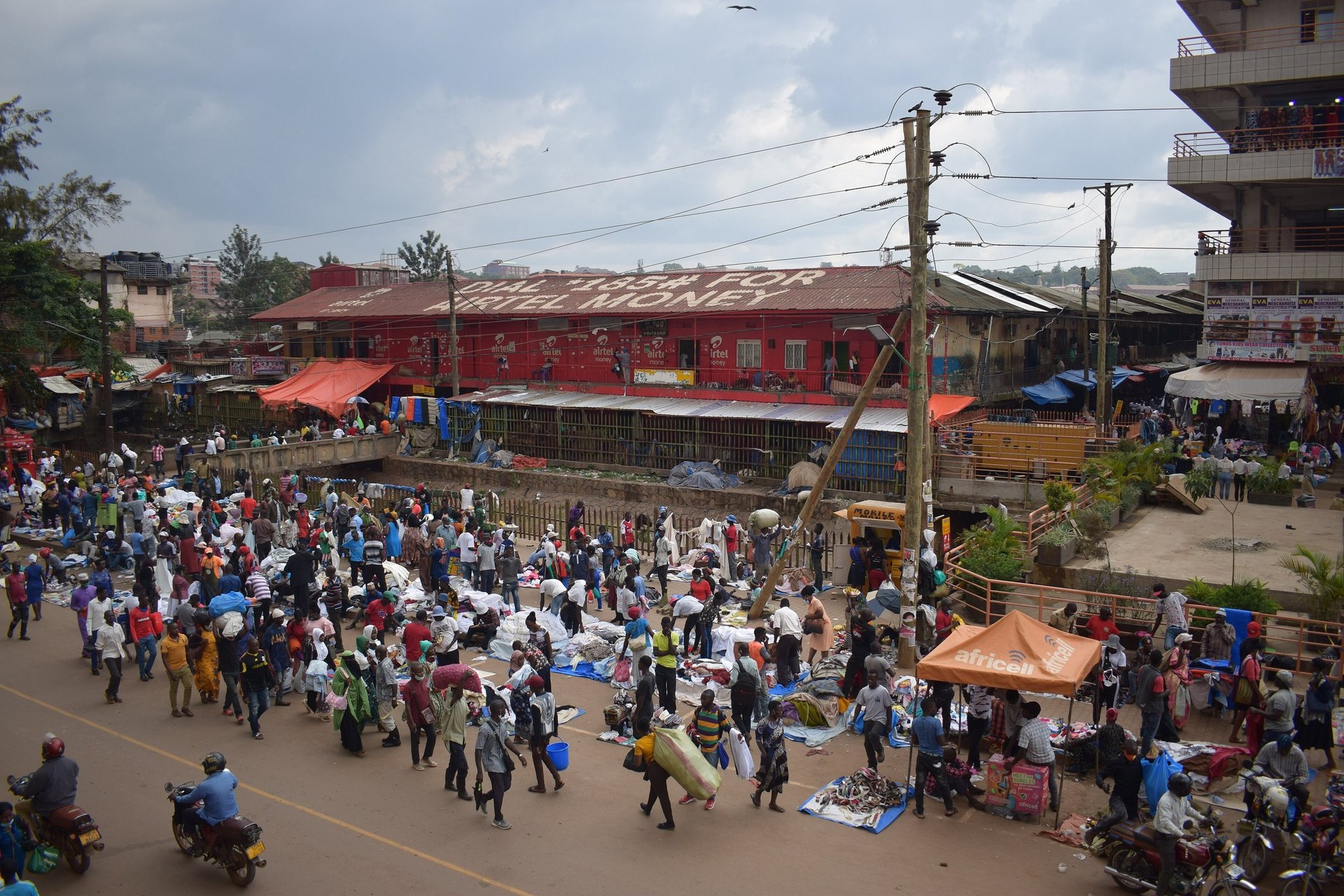
Crowds of shoppers and traders around the stalls in front of St. Balikuddembe Market
St. Balikuddembe (Owino) Market, 2020.Alvinategyeka, CC BY-SA 4.0

Markets and trade

St. Balikuddembe Market, still called Owino by almost everyone, is stall after stall of secondhand clothes, fabric, shoes and spices. Go with someone who knows it.

Faith on the hills

Anglicans on Namirembe, Catholics on Lubaga, Muslims on Kibuli and Old Kampala: the hills still carry the faiths and communities that shaped the city.

A few words of Luganda

Oli otya?
oh-lee OH-tyaHow are you?
Bulungi
boo-LOON-geeFine, good
Webale nnyo
weh-BAH-leh N-nyoThank you very much
Kale
KAH-lehOkay, alright
Mpola mpola
m-POH-la m-POH-laSlowly, slowly

The pronunciation is a rough English guide.

Places to see

Where the record still stands

Opening times and visiting rules change, and several of these are places of worship or royal sites. Check before you go, dress modestly, and ask before taking photographs. Sandra is happy to help you plan the day.

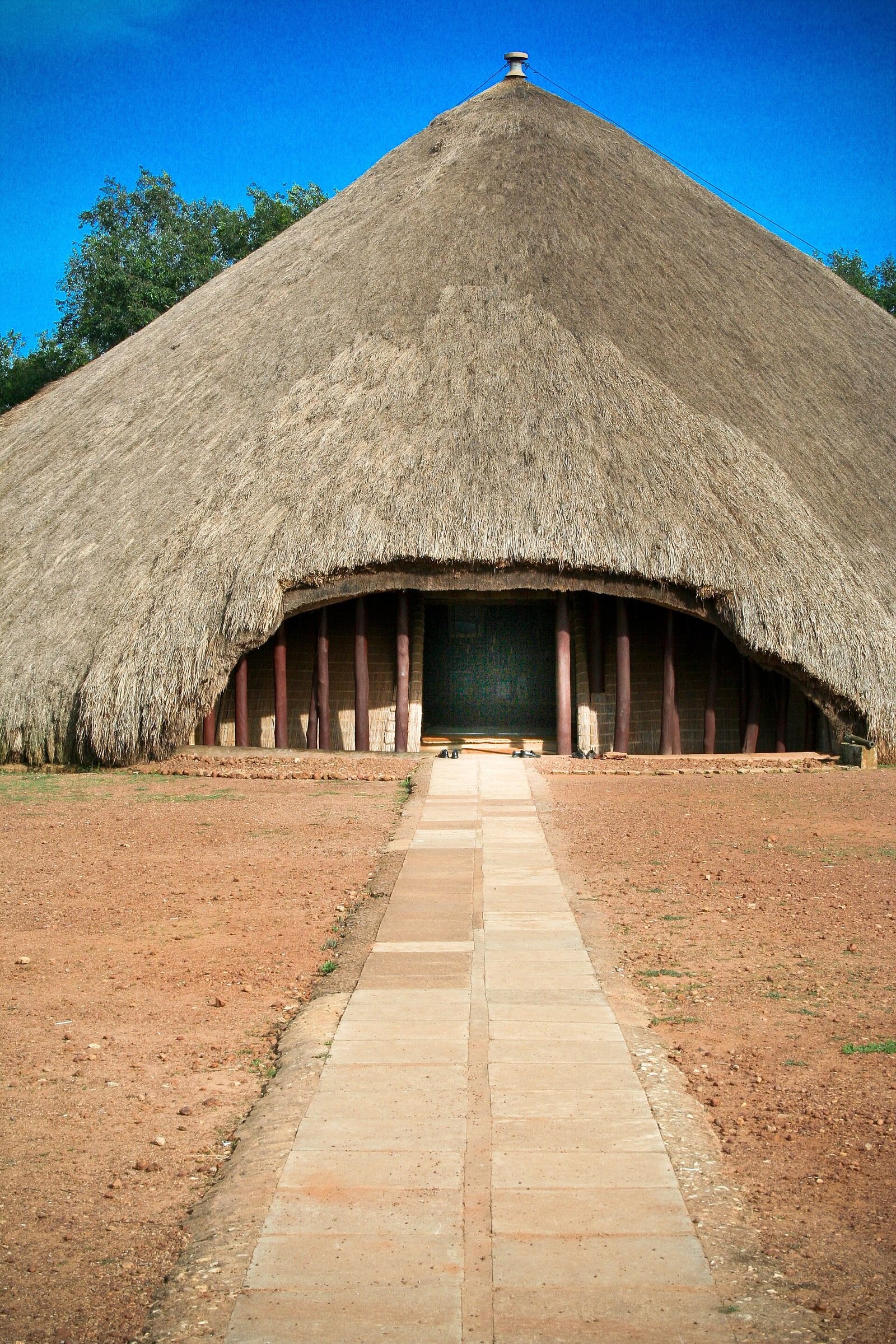
  1. The great thatched dome of Muzibu Azaala Mpanga at Kasubi, with a stone path leading to its entrance
    Muzibu Azaala Mpanga in 2009, before the fire.Andrew Moore, CC BY-SA 2.0

    01Kasubi

    Kasubi Tombs

    The burial place of four kings of Buganda, a UNESCO World Heritage Site, rebuilt in thatch, reed and wood after the 2010 fire.

    SourcesTombs of Buganda Kings at Kasubi

  2. The Bulange gates opening onto the straight Kabaka Anjagala road, busy with cars and boda bodas, running up towards Mengo
    From the Bulange gates up the Royal Mile, 2026.Samson Ssemakadde, CC0

    02Mengo

    The Bulange and the Royal Mile

    The kingdom's parliament, completed in 1958, at one end of the straight road to the Lubiri palace.

    SourcesWalking the Royal Mile

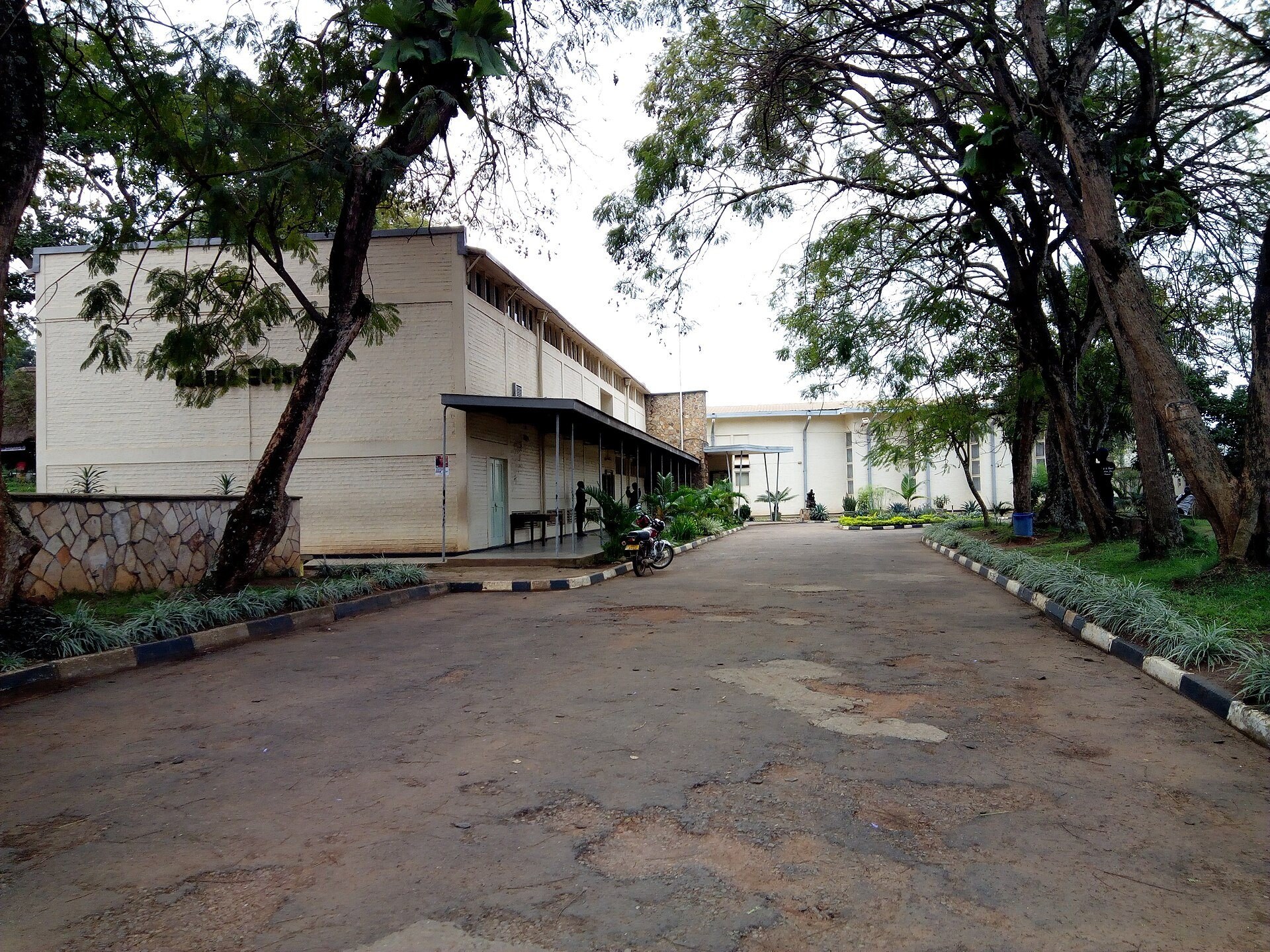
  3. The low modernist buildings of the Uganda Museum along a tree lined drive
    The Uganda Museum, 2017.Danielzyt, CC BY-SA 4.0

    03Kitante

    Uganda Museum

    The country's oldest museum, founded in 1908, in a modernist building of 1954 by the architect Ernst May.

    SourcesUganda Museum

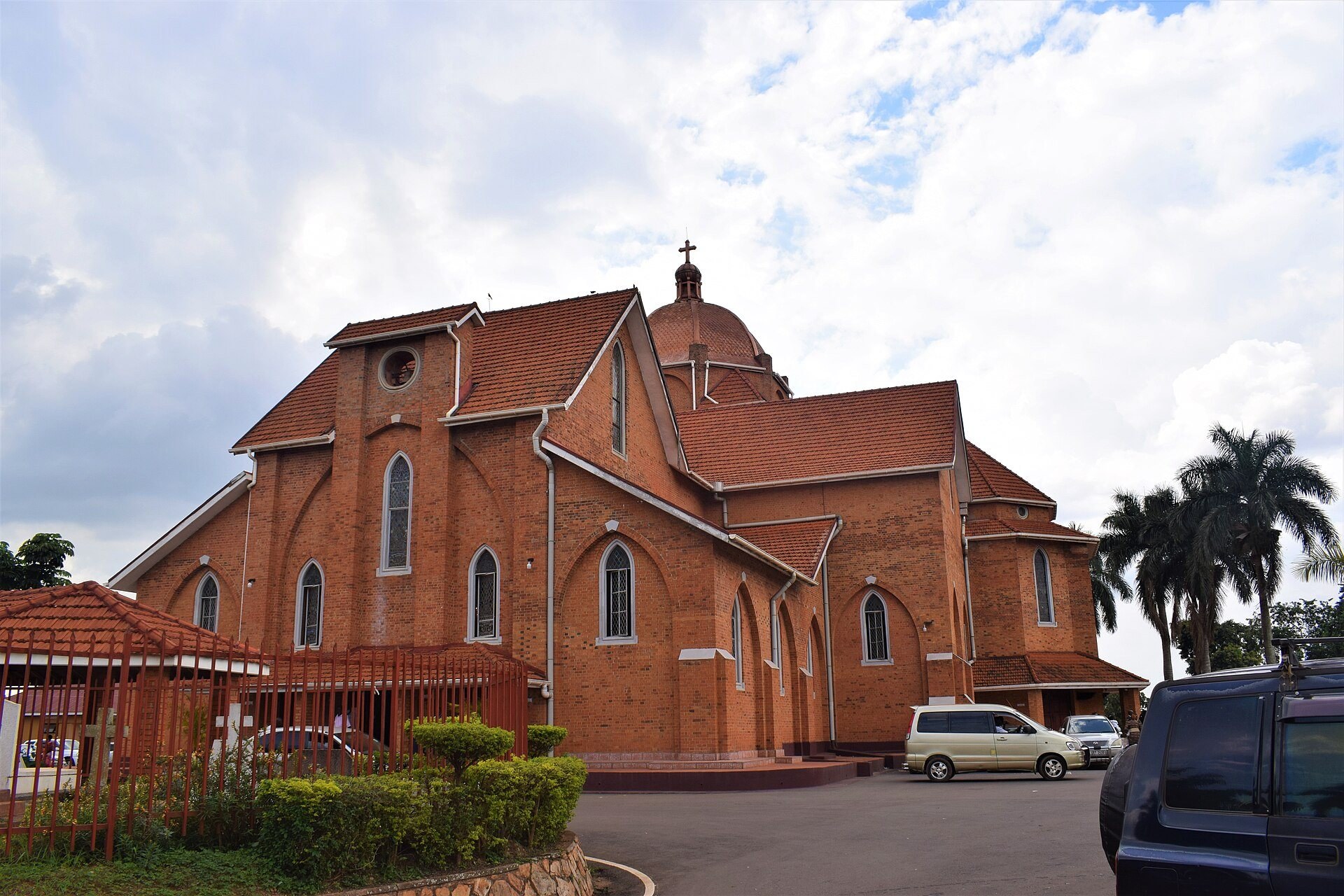
  4. The red brick Namirembe Cathedral with its central dome, seen from the side
    Namirembe Cathedral, 2020.Alvinategyeka, CC BY-SA 4.0

    04Namirembe

    Namirembe Cathedral

    The Anglican cathedral in red brick, completed in 1919, with one of the best views over the city from its hill.

    SourcesNamirembe Cathedral

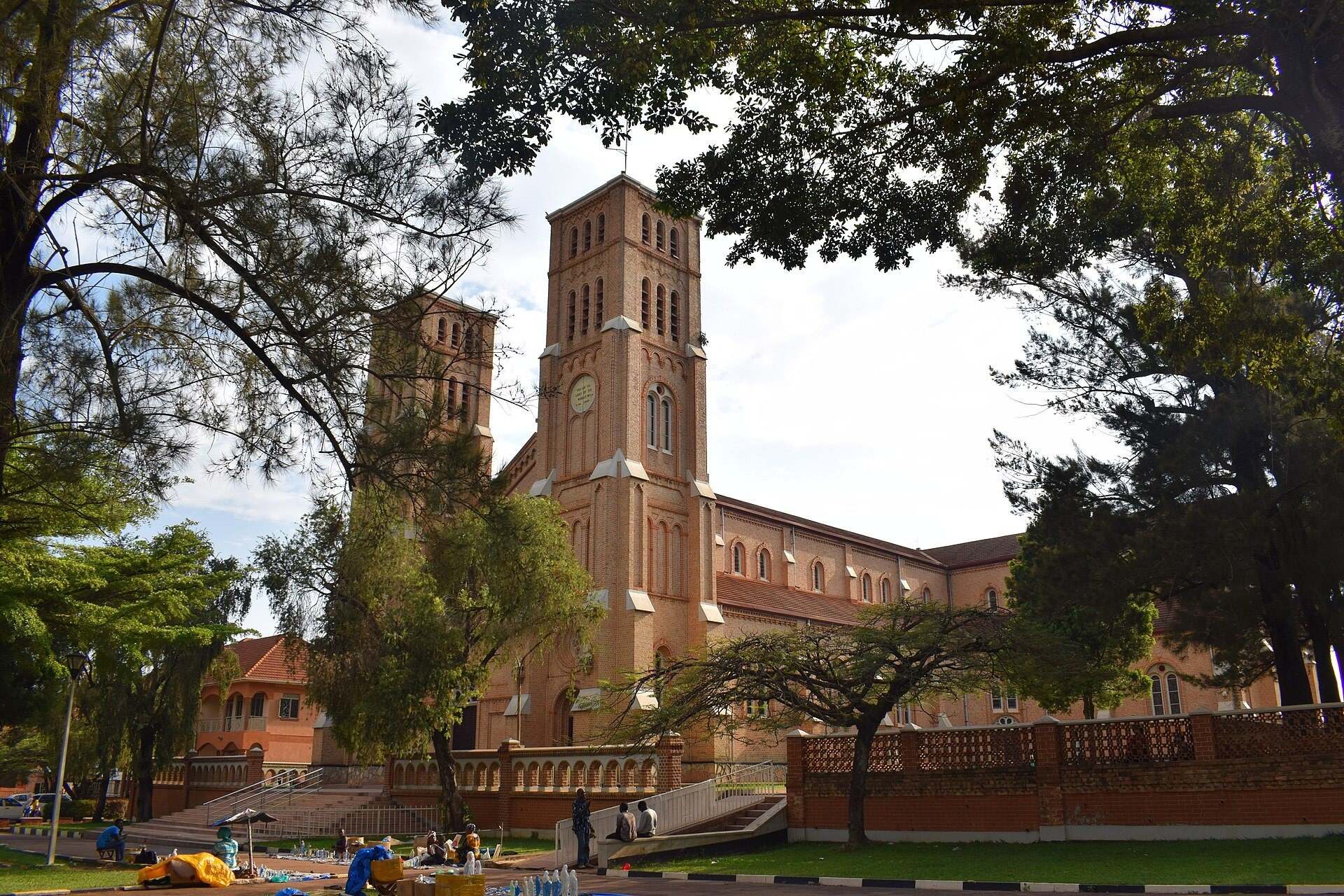
  5. The twin towers of Lubaga Cathedral rising above trees and a garden
    Lubaga Cathedral, 2020.Alvinategyeka, CC BY-SA 4.0

    05Lubaga

    Lubaga Cathedral

    The Catholic cathedral of the White Fathers, consecrated in 1925, on the hill where Mutesa I once kept his capital.

    SourcesLubaga Cathedral

The city this week

Nothing confirmed to list right now.

We only print events with a confirmed date and an official link. For exhibitions, concerts and markets happening now, see the city's own guide.

Visit Kampala, the city authority's guide

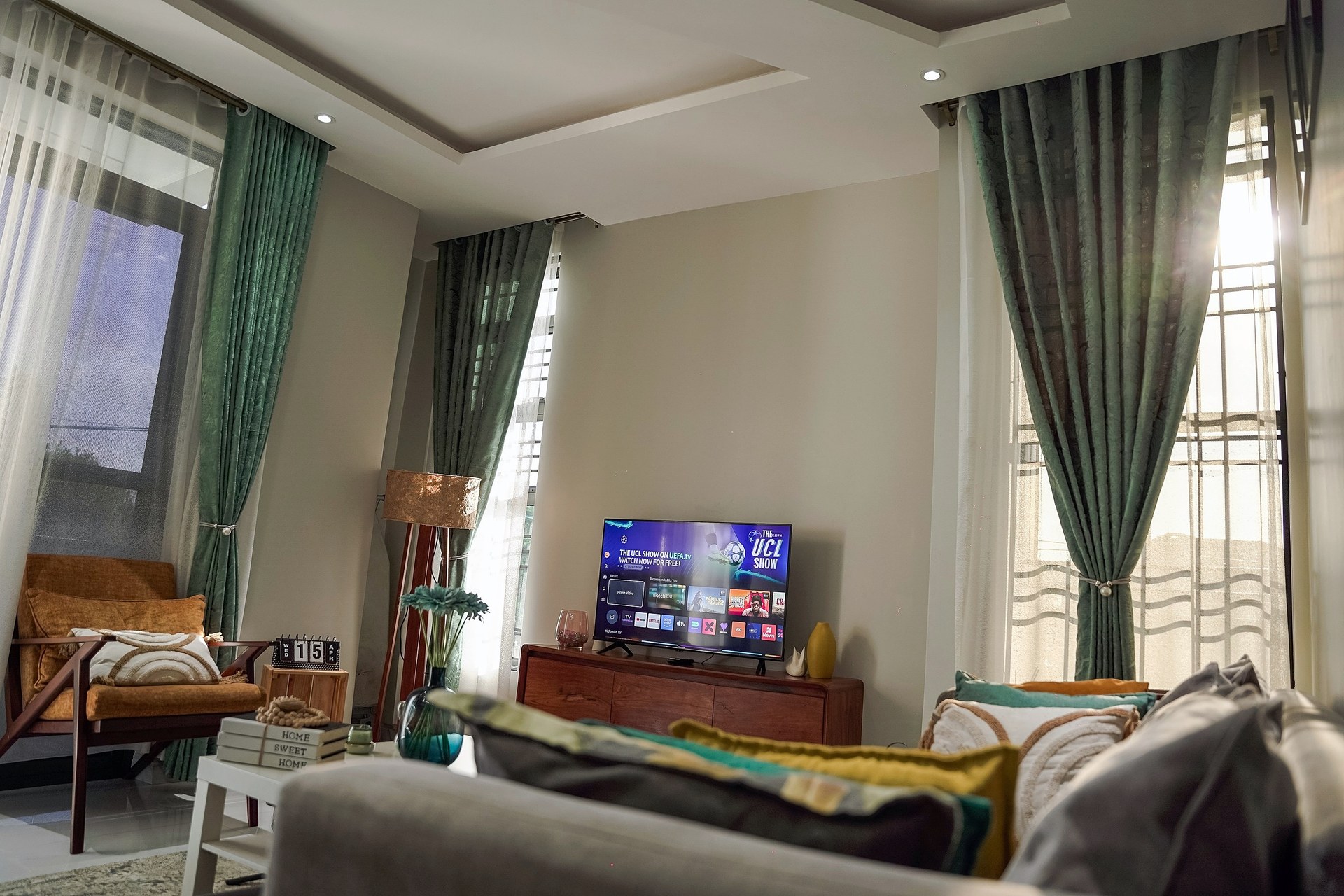
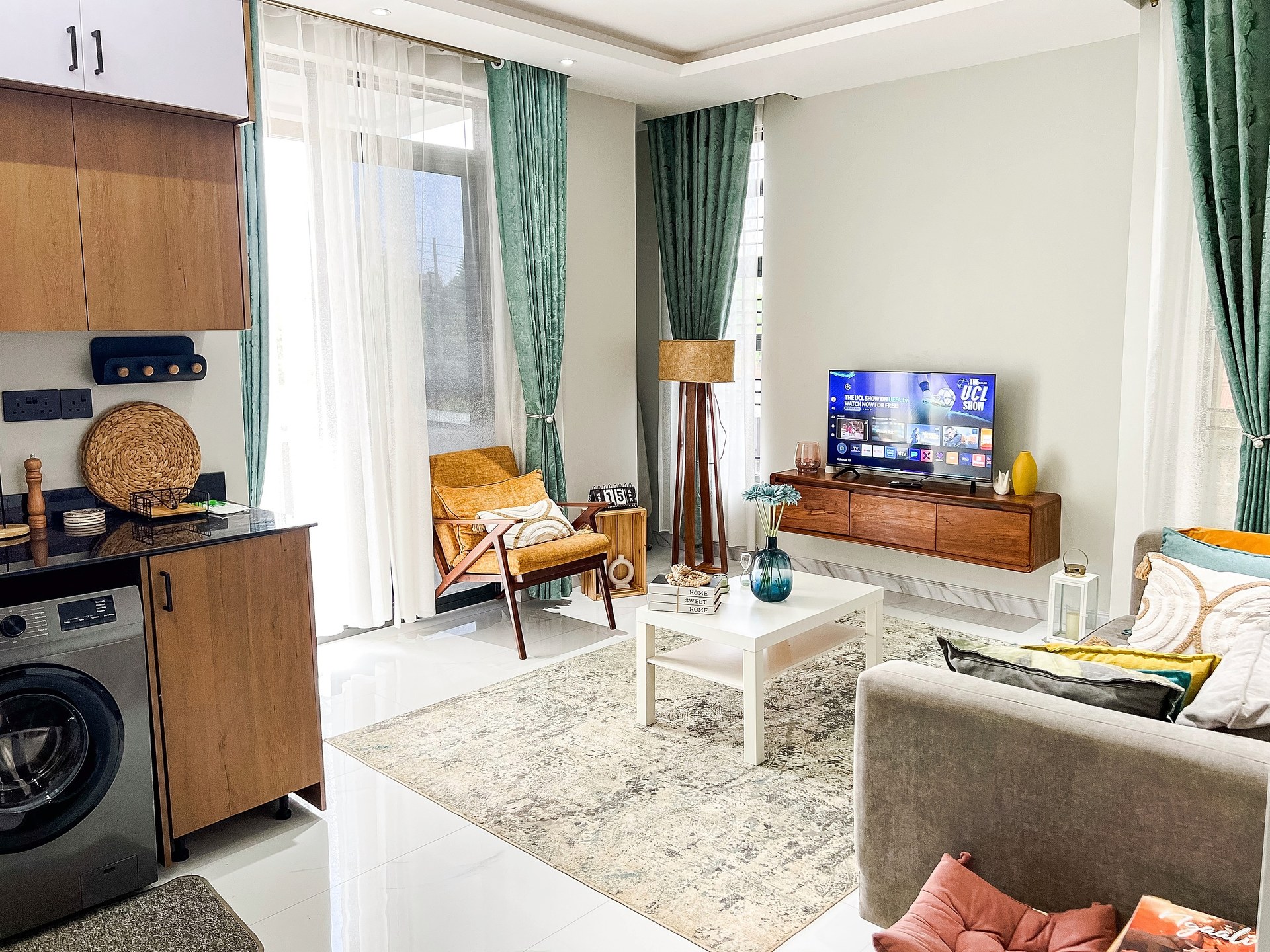
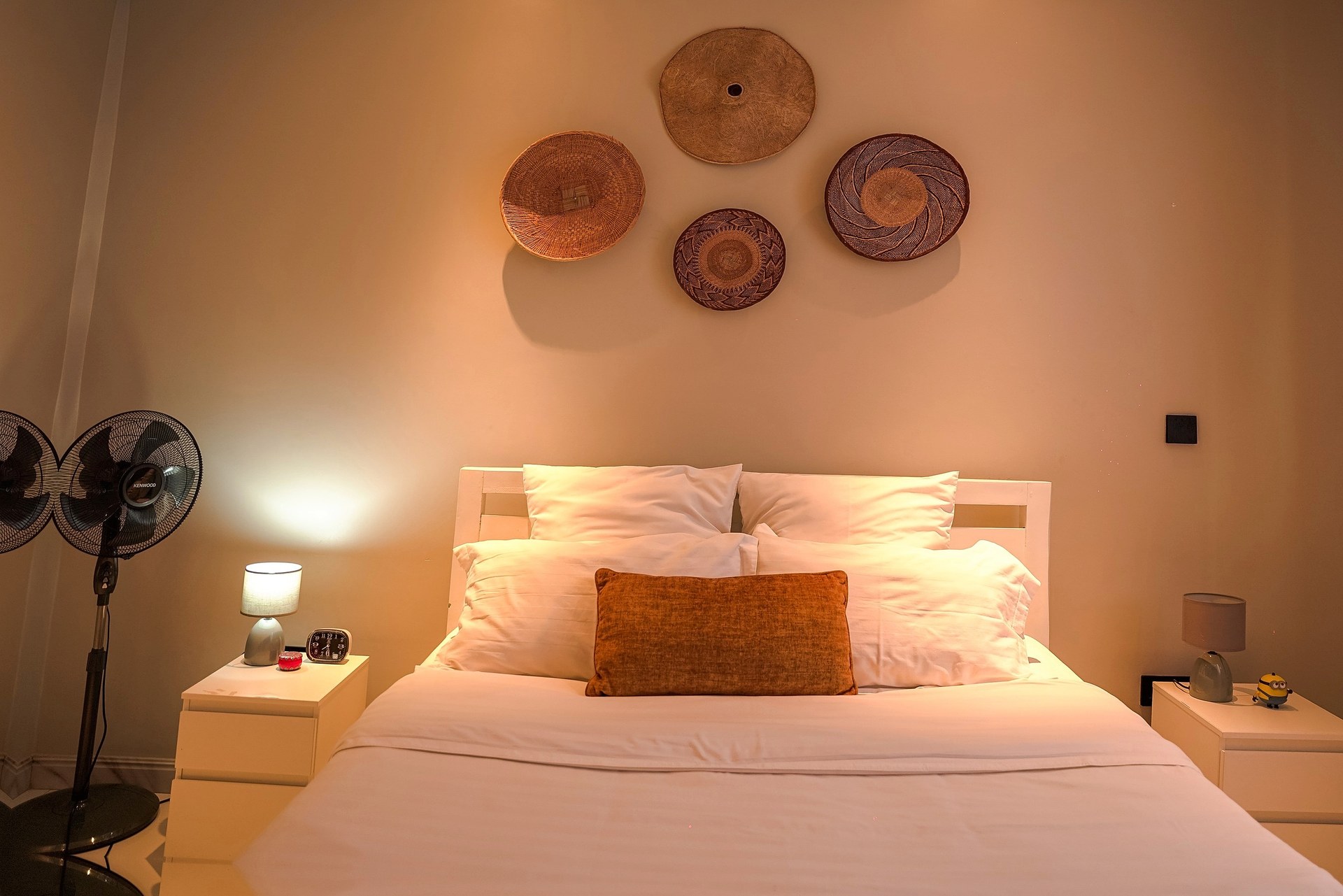
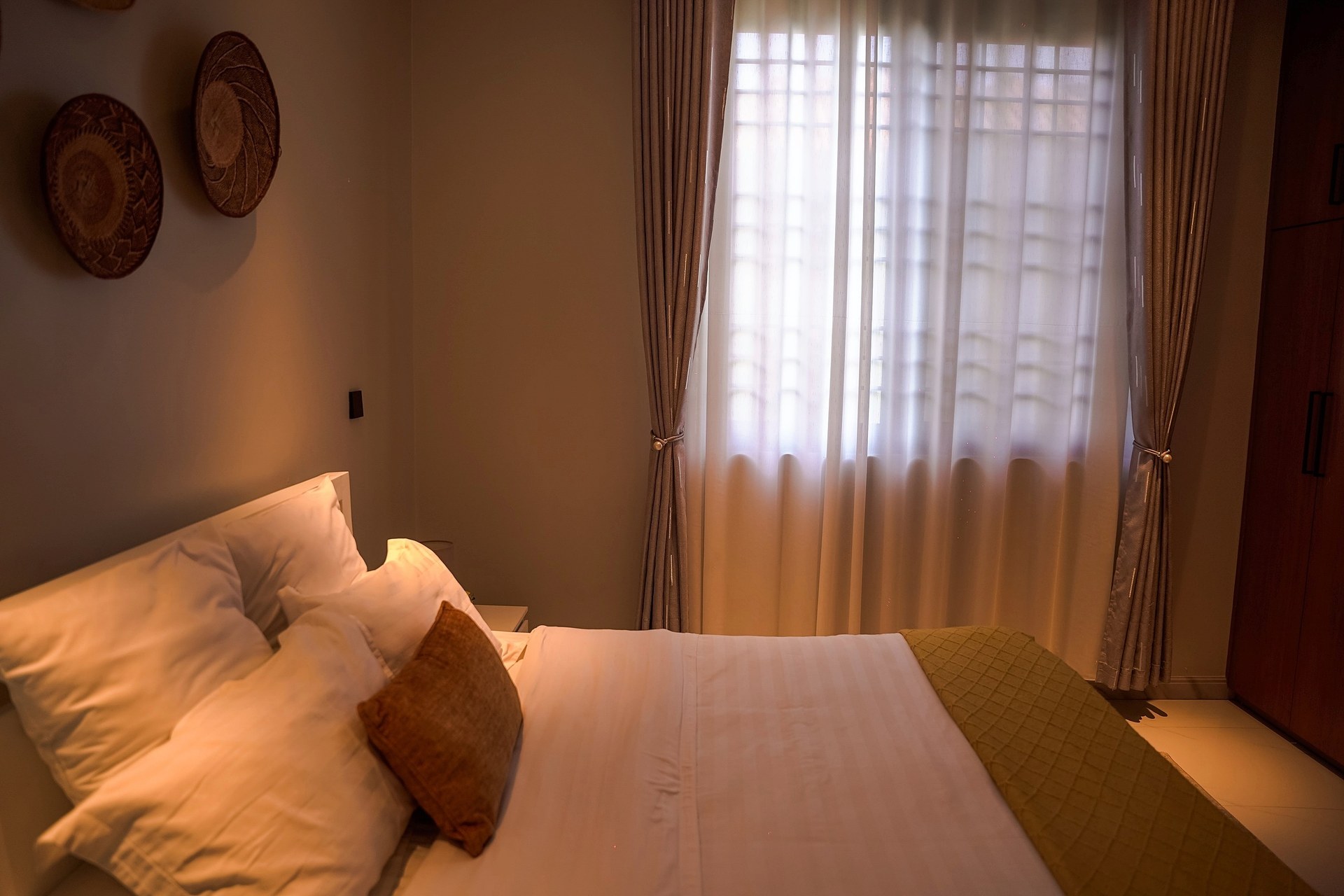
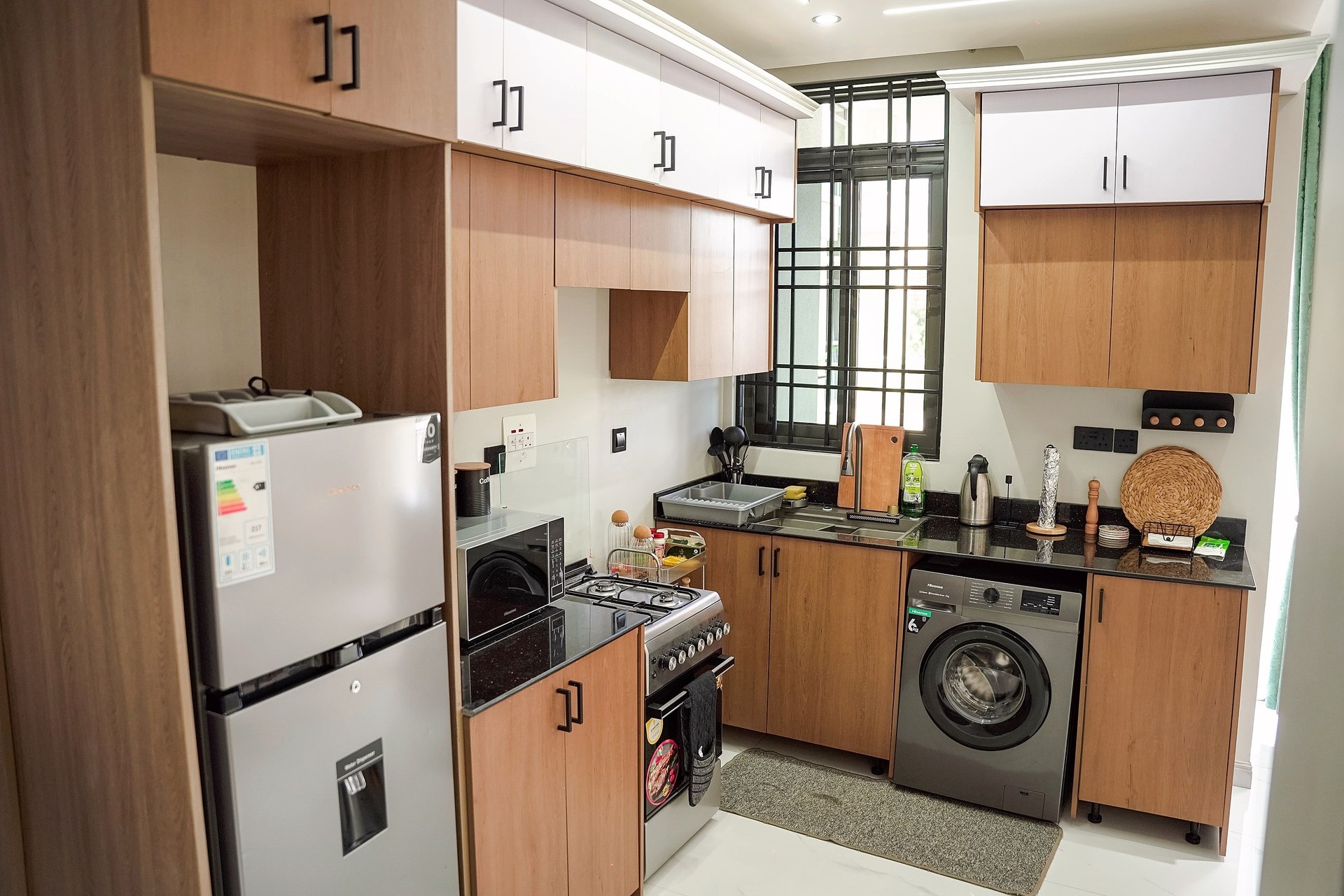
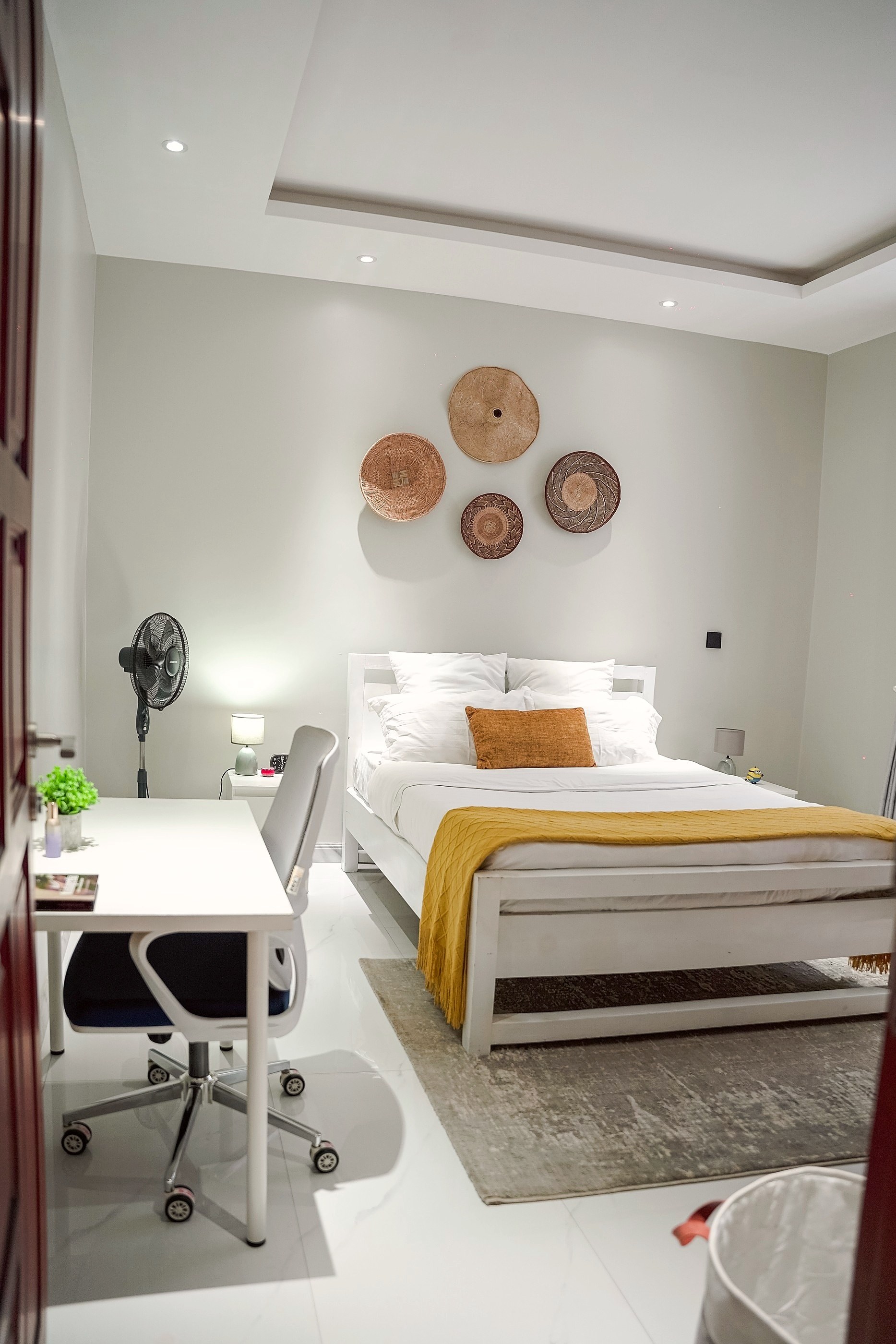
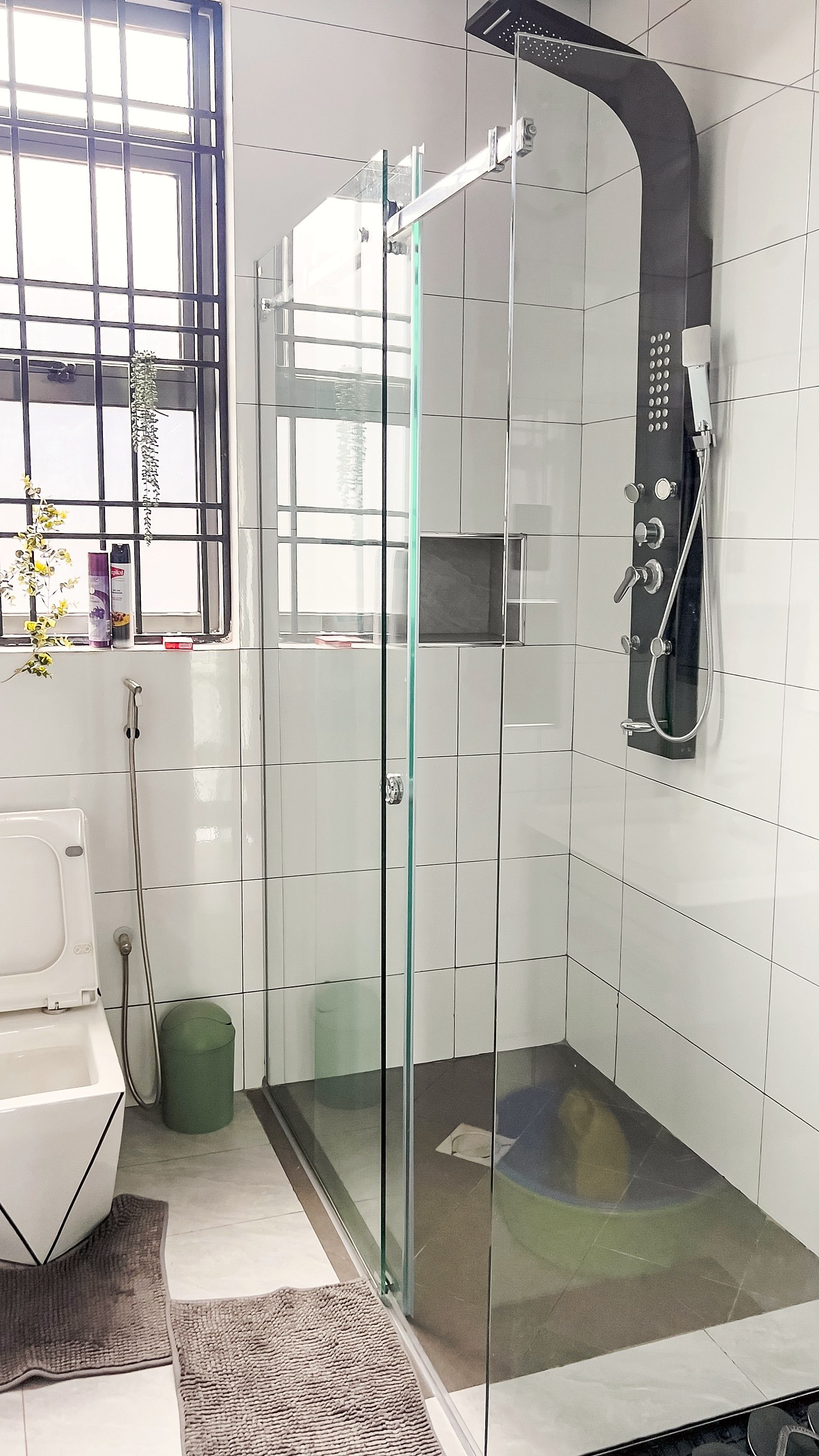
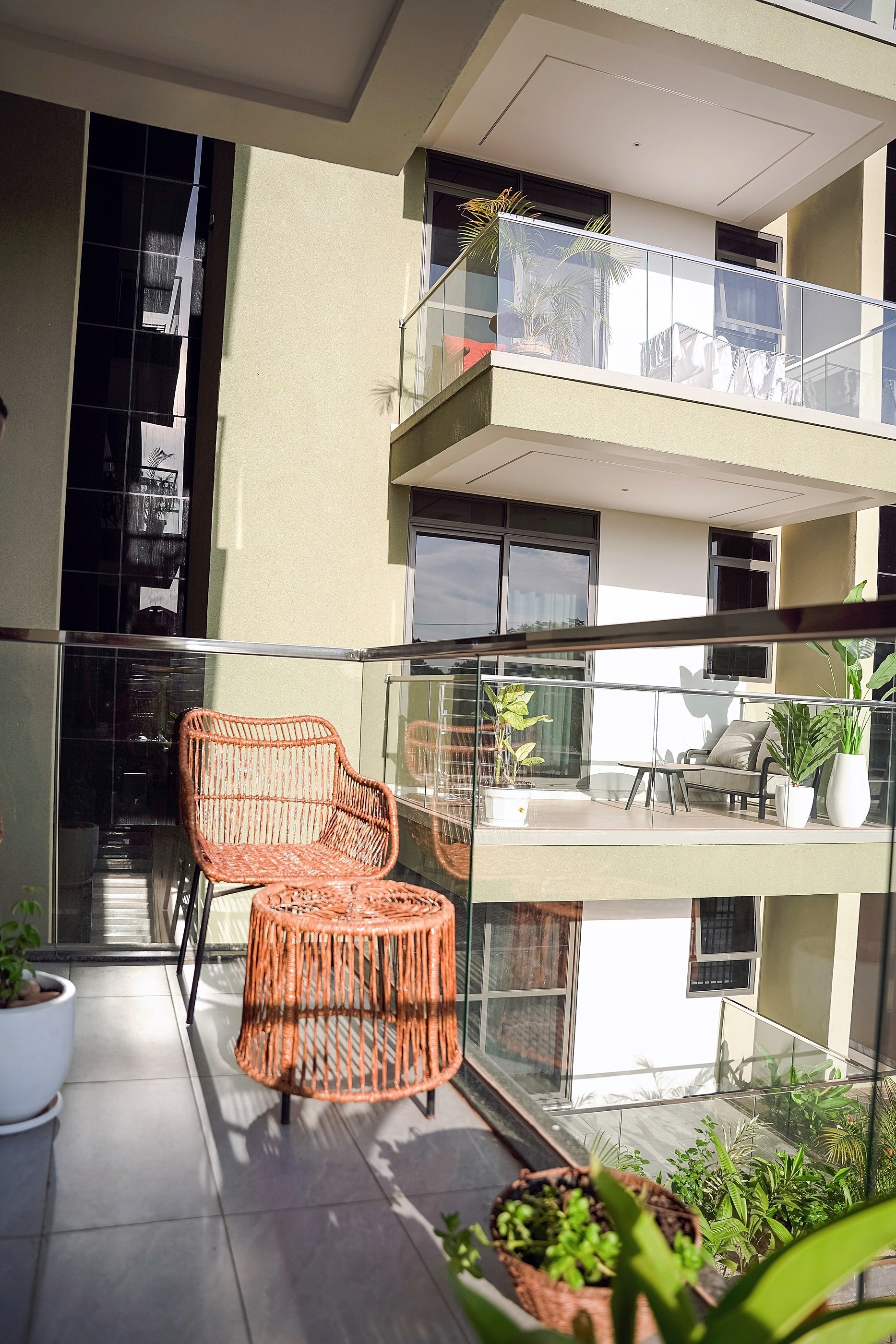
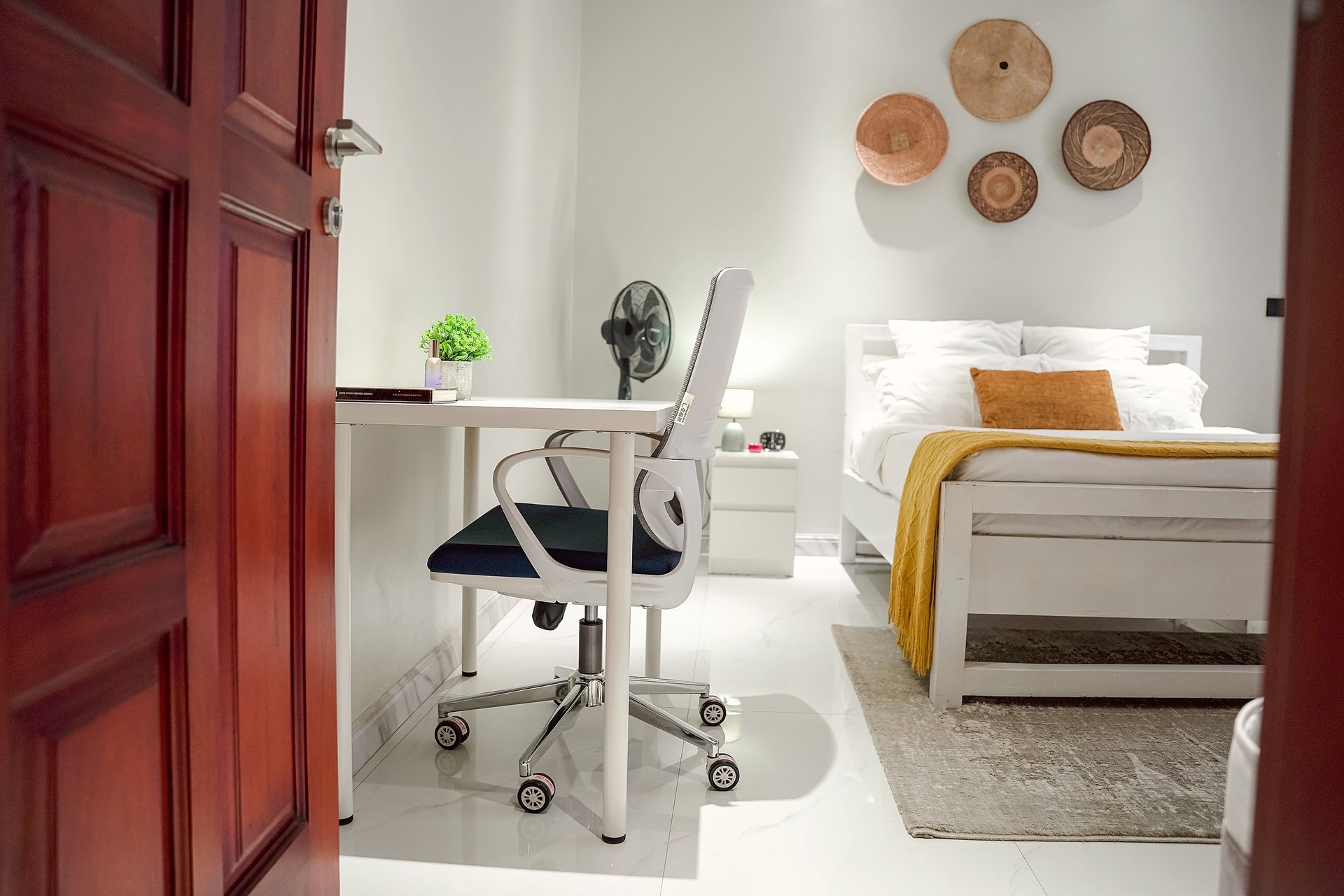
After a day on the hills, BluBlush in Ntinda Kiwatule is your quiet place to come back to.

Explore Kampala today: food, music, nights out
Image credits and sources

Photographs from Wikimedia Commons and the Library of Congress, used under the licences shown; cropped and resized for this page. An editorial page by BluBlush Fine Living. Not connected to any newspaper, past or present.